All about American Akita

Is the American Akita right for you? Discover responsibly raised puppies.

01

Physical Appearance
“Whoever said you can’t buy happiness forgot little puppies.” – Gene Hill The Akita always makes a lasting first impression. Akitas are large, powerful dogs with substantial bone and musculature. The broad chest and neck serve as a solid base for the Akita’s large head, the Akita’s most distinguishing feature. The broad skull and the short muzzle form a blunt triangle when viewed from above. The massive head in combination with the small triangular shaped eyes and small erect ears give the Akita an intimidating, yet dignified, expression. The Akita is a very balanced looking dog, being only slightly longer than it is tall. The tail is curled and carried over the back, which serves to balance with the dog’s head. Typically the male Akita is substantially larger than the female. The males range in weight from about 100 to 130 pounds, while the females range from 70 to 100 pounds. The double coat of the Akita has the appearance of the typical northern breeds. It is short to moderate in length, but very dense and consists of two layers. The undercoat is very soft and is the primary insulator, while the outer coat, or the guard hair, is slightly longer and coarser. The Akita is very well suited to the coldest of climates, and while it might not enjoy hot weather, its coat does lighten considerably in the warmer months to compensate for the heat.
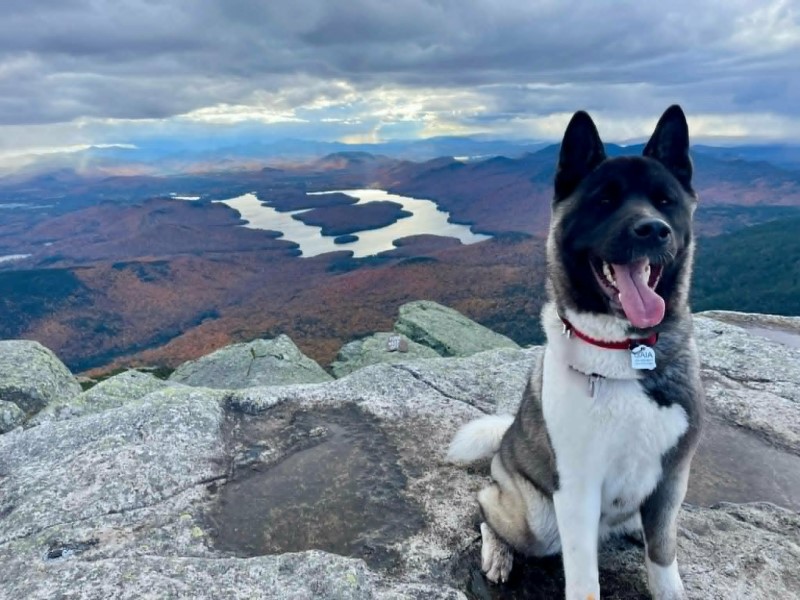
American Akita Against Rocky Landscape

02

Temperament

The personality of the Akita is very complex. While temperaments vary, most would agree that the Akita is very intelligent, extremely loyal, and can exhibit aggressive tendencies. The aggressive tendencies are almost exclusively towards other dogs of the same sex. Typically, Akitas are not aggressive towards people, but do have a very well developed guarding and protective instinct. Akitas also have a high and well developed prey drive. An Akita is not likely to shower affection on someone that is not a member of his family or a close friend that he sees frequently. The loyalty and devotion displayed by an Akita is phenomenal. The typical pet Akita will follow you from room to room, yet has the uncanny ability not to be under foot. Your Akita lives his life as if his only purpose is to protect you and spend time with you. This trait is evident in the tale of Hachiko.
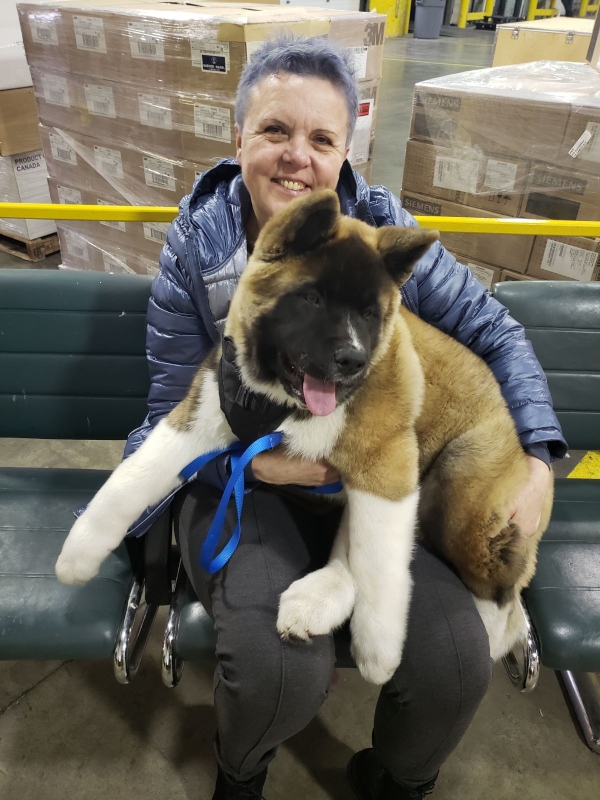
Rita with the American Akita puppy

03

The Akita as a House Pet

Akitas have been bred for centuries as house companions. Despite being large, hardy dogs capable of withstanding the elements, they adapt remarkably well to life in the home. Two of their outstanding qualities as house pets are their cleanliness and ease of housebreaking. Akitas are often described as almost “cat-like” in their cleanliness and lack of odor, which may contribute to how quickly they learn. Most Akitas can be successfully housebroken within a matter of weeks. Akitas are also devoted, patient companions and natural protectors of children. They are typically gentle with children, and Japanese tradition holds that mothers once entrusted their children to Akitas for protection. However, when introducing a new baby to a home with an Akita, proper introductions and precautions are essential until the dog understands the change. As with any large breed, young children should never be left unsupervised with an Akita. Responsible supervision is essential to prevent accidental injury.
American Akita as a Family House Pet

04

Is the Akita a Good Fit for Your Lifestyle?
Right about now, you are probably thinking . . . What’s the catch? Well, the Akita is not the right dog for everyone. The person who assumes responsibility for an Akita MUST be able to take control of the dog at an early age. This means that the person has to be the dominant party in this relationship. Dominance is more a state of mind, but you must also be prepared to physically dominate the dog if necessary. Akitas, as with most dogs, live their lives in a pack environment, whether the pack be animals or people. If you are not willing to be the leader of the pack, the Akita most certainly will. So the Akita owner must have the energy and will to keep a firm, consistent discipline as the dog matures. A little work and persistence in training in the early months with an Akita will reap you huge benefits as a well-behaved member of the family down the road.
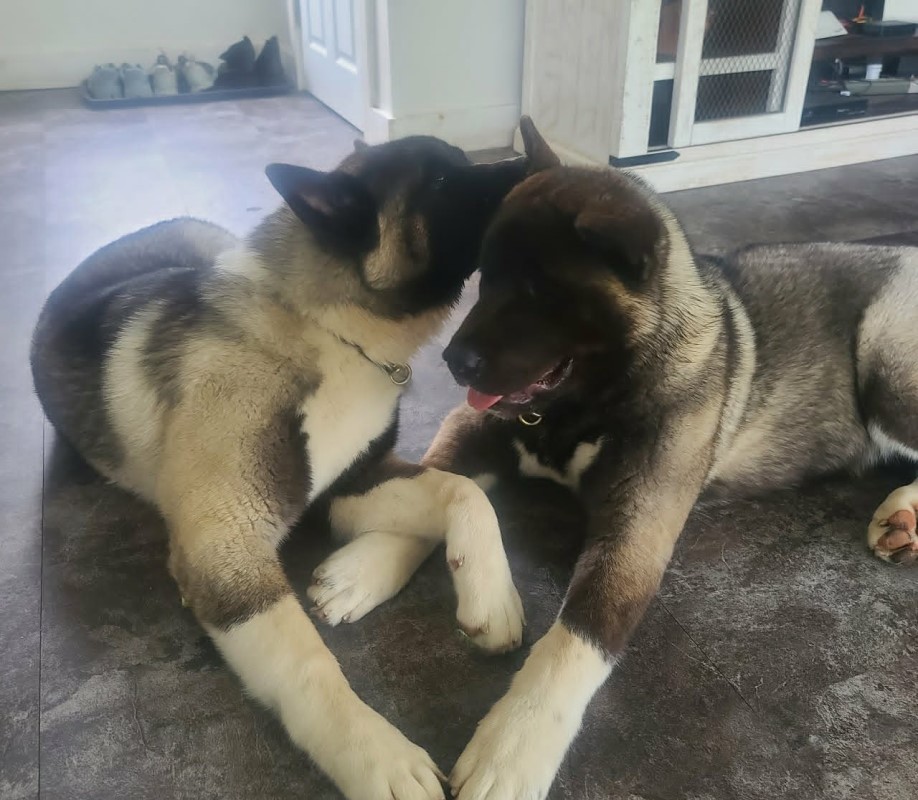
Two Akita Puppies

05

Before You Buy an Akita Puppy, Think Carefully
What do I want my dog to be like? How will this dog fit into my lifestyle? What is my living situation? Consider what your needs are and what the dog’s needs will be. Do they conflict? Think of the dogs you’ve enjoyed owning in the past. Were they easygoing or intense? Self-willed, or independent; outgoing or reserved; placid or energetic? Then ask yourself if you have the time needed to devote to socializing, training, and loving your dog.
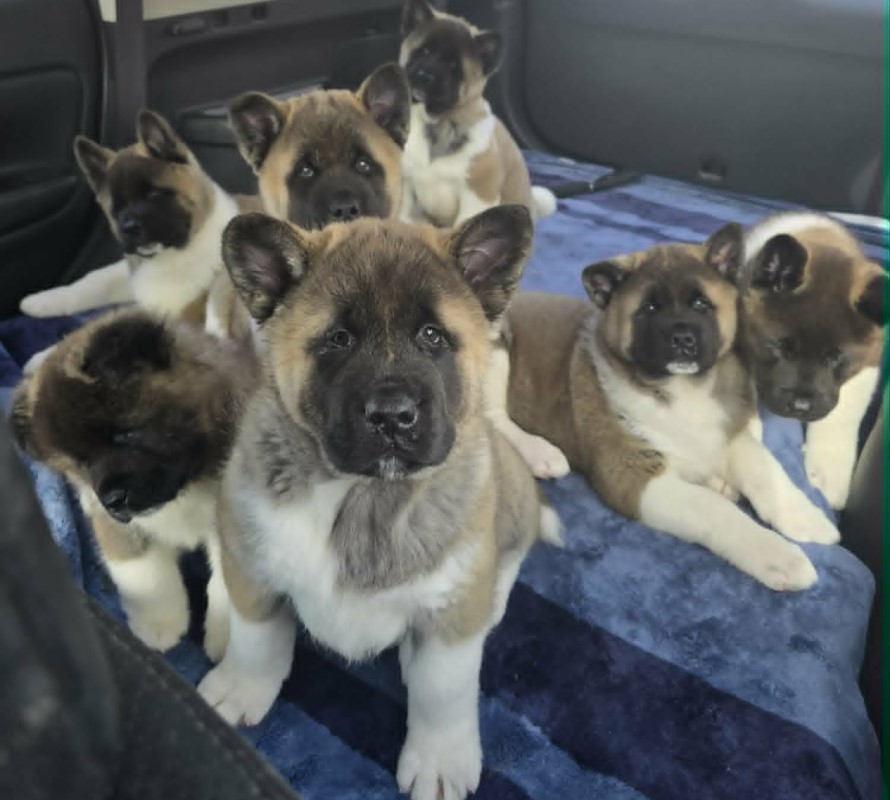
Akita Puppies

06

Will You Enjoy Life with an Akita?
The Akita is an extremely intelligent, large, energetic, and strongly territorial dog whose life revolves around his owners. If he is the right breed for you, he can be one of the most rewarding dogs to own. But the Akita is also demanding and should never be added to a household on a whim. If you want a bright, sensitive, responsive companion who will enjoy spending time with you, respond to training, and remain protective, loyal, and devoted to you and your family throughout his life, you may find the Akita an excellent choice. The Akita is naturally protective and can be an effective guard dog. He considers protecting his family one of his jobs, without needing to be trained to do so. He will watch people on your property and may express suspicion with a low rumble; Akitas are not typically barkers. They quickly learn to distinguish between strangers and friends. However, Akitas can be intolerant of other dogs, particularly those of the same sex. UNDER NO CIRCUMSTANCES SHOULD AN AKITA BE ALLOWED TO ROAM THROUGH THE NEIGHBORHOOD! Despite his size, the Akita does not require huge amounts of exercise. Moderate daily exercise, along with opportunities for energetic play, is generally sufficient. You and your dog will be happier if you choose a breed that fits your existing lifestyle. Do not expect your way of life to change once you acquire a dog.
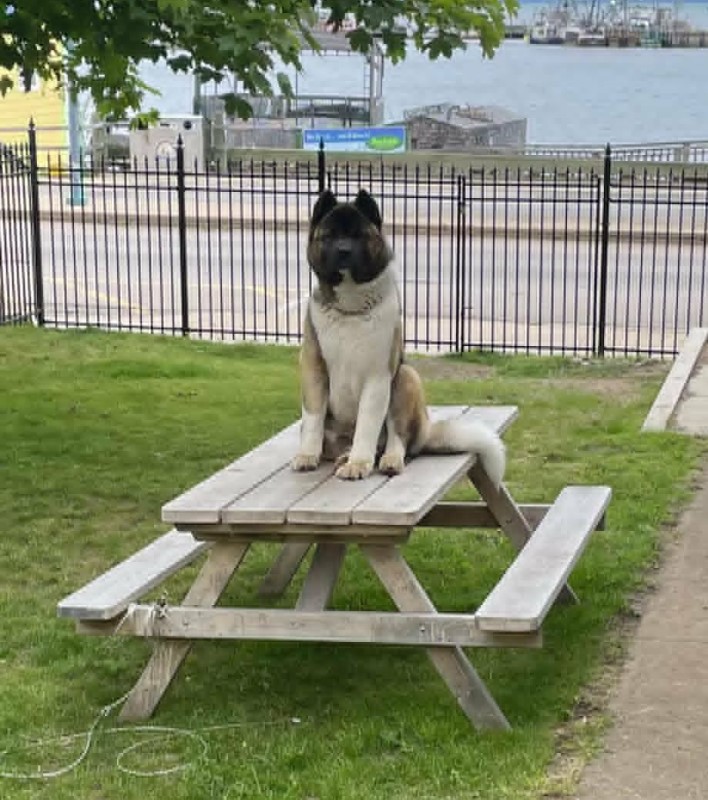
Akita sitting on a picnic table

07

Living with an Akita

Akitas do not shed continuously, but they typically “blow their coats” about twice a year. As the new coat grows in, large tufts of loose hair come away easily with an undercoat rake or wire slicker brush. Most Akitas enjoy this extra attention, and regular grooming during the shedding period helps the new coat come in more quickly. The Akita is a working dog, and working breeds include some of the most intelligent dogs. You may be amazed by how quickly an Akita learns and by how much you can teach him. That intelligence comes with an obligation. An Akita will not thrive if left alone in a pen or house all day. Working dogs are happiest when given responsibility and meaningful activity, whether that involves obedience training, babysitting, backpacking, hunting, or another suitable job. The Akita demands your attention and thrives on it when trained, engaged, and worked regularly. DON’T BUY AN AKITA because of pictures you’ve seen, stories you’ve read, or because they are the “IN THING.” Meet the dogs. Watch them at shows and visit them in their homes. There is a big difference between a cute eight-week-old ball of fur and a fully grown adult Akita. If, after seeing the breed firsthand and understanding its demands, you still want an Akita, welcome to what can be a most pleasurable and rewarding experience.
Akita Puppy

The Akita is a Japanese breed.

In his native country, the Akita has been declared a national treasure. An Akita in a home is believed to be a symbol of good health, prosperity and good fortune. Helen Keller brought the first Akita to the United States in 1937.

Akitas do not bark unless there is a good reason.

When an Akita is barking, pay attention. Akitas are natural guardians of the home and do not require any training to turn them into guard dogs. When there is a reason to protect family and property, your Akita will act to do so.

Akitas are inherently aggressive toward other animals.

For this reason, they should not be allowed to run free or roam at will. You can exercise your Akita off leash when you are in an area where contact with other animals and people is unlikely.

Male Akitas show aggression toward other male dogs.

And female Akitas usually will not tolerate another female. Akitas can live peacefully with a dog of the opposite sex, though some Akitas prefer being an only dog!

Akitas may consider small animals as prey and hunt them.

This includes cats, rodents, birds, small wildlife, and small dogs. Akitas can be raised to accept animals in residence. Some adult Akitas can even be trained to fit into a home where other animals are already established. It is, however, imperative that the Akita be closely watched around the other animals until you have established a peaceful co-existence.

Akitas are VERY food possessive.

If you have other pets, you will want to be certain the Akita is given its own food bowl or treat well away from any other animals and that no other animal is allowed near the Akita until the food is gone.

Akitas not raised with children are not always tolerant of small children.

The Akita should never be left alone with a child until you are certain you have a dog who adores all children. Often, Akitas raised with children will tolerate their own children but may not accept the neighborhood kids. As a general rule it is wise not to leave an Akita or any large dog alone with children under 12 years of age.

Akitas do not like to be teased and can respond by biting.

Some children are allowed to treat animals unkindly, a behavior that often leads to cruelty to animals. These children should be kept away from an Akita, whose large size and hunting instincts can endanger the child’s life.

Akitas like to take charge.

This is an inherited trait from their wolf ancestry—and may, at some time, challenge you for the dominant position. This behavior cannot be tolerated, and a firm, consistent correction should be your immediate response. Akitas with good temperaments accept discipline well—not beating, but intelligent discipline. A good scruff shaking is an effective form of discipline for an Akita. Frequently, a firm verbal command will get your point across.

Akitas should be obedience trained BY their owner and not sent away to school like other breeds!

A good obedience class, perhaps beginning with puppy kindergarten, will guarantee you a firm bond with your dog and a well behaved dog.. Remember though, Akitas are extremely intelligent and tend to get bored easily. They learn quickly, so short training periods are suggested. This keeps the dog from becoming bored. Akitas are also very stubborn, and when the dog thinks it’s a waste of time to “sit” or “stay” one more time, he will simply walk away! Obedience training requires patience!

Some Akitas are talkers!

They may grunt, groan and mumble to entertain themselves and you. This conversational verbalizing IS NOT growling and should not be interpreted as a growl, which sounds quite different. Akita “talking” is an endearing trait and should not frighten you. After living with your dog, you will easily distinguish between talking and growling.

Most Akitas enjoy carrying things around in their mouth

including your wrist! They may take you by the wrist to lead you to the cookie cupboard or to their lead. It is not an aggressive act; it is an endearing trait. Try allowing your Akita to bring in the newspaper or the mail. They love to do these types of jobs.

Akitas are very family-oriented and are not happy when kept apart from the family.

If you do not plan on having your dog live with you inside both your home and yard, you should not seriously consider an Akita for a pet. Akitas are not hyperactive and fit into a sedentary household, but for optimum health for both YOU and your Akita, regular exercise is important. Akitas will live from 10 to 14 years with good care and proper nutrition.

Hypothyroid disease affects a large percentage of the breed.

It is easily treated by twice-daily hormone replacement therapy. A simple blood test, including a T3 and T4 thyroid levels test, will determine the existence of the condition. The symptoms may include one or all of the following: skin and coat problems, sudden-onset aggression, itching, lethargy, and musky odor. Before treating skin conditions with any drugs, have your vet check for sarcoptic mange, sebaceous adenitis, and hypothyroid disease. Other diseases found in Akitas include progressive retinal atrophy (blindness) manifested by impaired night vision, hip and elbow problems, autoimmune diseases, degenerative myelopathy, and some blood disorders, though these are not common problems in the breed.

Akitas require good quality meat and bone meal-based food.

They do not thrive as well on soybean-based dog foods. Akitas 7 years and older should be fed one of the commercial LITE foods to lessen the onset of kidney disease which is a problem in older Akitas. (Akita Rescue Society of America)

Thinking about adding an American Akita to your family?

If you’re looking for an American Akita raised in nature with care and respect, reach out to Rita and see the environment for yourself.

Scroll to Top